How Slow Coastal Travel Is Changing the Summer Escape
2026-06-22 Richard Shane
Founder and CEO
The World’s Greatest Vacations
Coastal travel has long been associated with escape. The sea, the light, the open horizon, the soft change in pace that seems to arrive before the first bag is unpacked. For generations, the coast has offered a familiar promise, to step away from routine and enter a different rhythm.
What is changing is the way travelers want to experience it.
The traditional summer beach holiday, built around one resort, one stretch of sand, and a predictable pattern of days, is giving way to something more fluid. Luxury travelers are increasingly drawn to coastal journeys that move slowly, follow the shape of the shoreline, and allow each place to reveal itself in sequence.
Slow coastal travel is not about doing less. It is about traveling with the coast rather than simply arriving beside it.
The Coast as a Route, Not a Backdrop
The most compelling coastal journeys are built around movement.
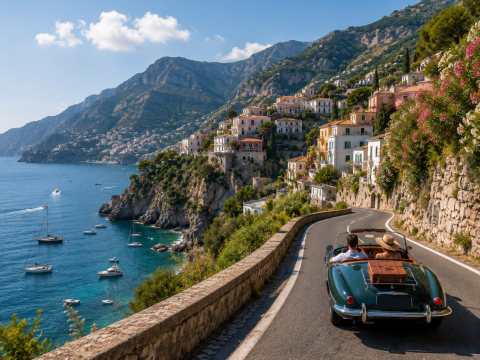
A winding road above the water. A small ferry between islands. A private boat slipping into a quiet bay before lunch. A train that follows the edge of the sea. A walking path from one village to the next, with the horizon appearing and disappearing between trees, cliffs, and stone walls.
In this kind of travel, the coastline becomes more than scenery. It becomes the structure of the journey. Each bend in the road, harbor, headland, and inlet creates a new chapter. The destination is not a single point on a map, but the gradual unfolding of a region.
This is why slow coastal travel feels especially well suited to summer. It allows the season to stretch. Days are shaped by weather, tides, meals, and light rather than by a rigid schedule. A traveler can move, pause, swim, dine, and continue, without the trip ever feeling overplanned.
Beyond the Resort Stay
The resort will always have its place in coastal travel. There is obvious appeal in arriving somewhere beautiful and staying still. But many luxury travelers are now looking for something less contained.
They want the freedom to experience a coast in layers. A few nights in a refined harbor town. A countryside inn above the sea. A design-led hotel on a quieter peninsula. A private villa near a fishing village. A final night in a historic city before returning home.
This approach creates contrast. It avoids the sameness that can sometimes define even the most beautiful resort stay. One morning may begin with coffee on a balcony above a marina. The next with a walk through pine forest toward a hidden beach. Another with a boat ride to a restaurant accessible only from the water.
The luxury is not only in the accommodations. It is in the ability to move gracefully between experiences.
The Return of the Coastal Road
Few forms of travel feel as naturally cinematic as a coastal road.
The best ones are not necessarily the fastest. They bend, climb, narrow, and open suddenly to views that feel almost staged. They pass through villages, vineyards, cliffs, beaches, harbors, and quiet stretches where the only real landmark is the sea itself.
For travelers seeking a slower summer escape, the coastal road offers a rare combination of independence and atmosphere. It allows for planned stops and spontaneous ones. A viewpoint that was not in the itinerary. A small restaurant with tables under trees. A beach reached by a rough path. A town that was meant to be brief, but becomes the place everyone remembers.
This kind of journey rewards patience. The road is not simply a way to get somewhere. It is part of the reason to go.
Small Boats and Quiet Bays
Water changes the way a coastline is understood.
From land, the coast can feel familiar, even when it is beautiful. From the water, it often becomes more mysterious. Villages appear differently. Cliffs feel larger. Beaches become hidden rooms. The distance between places becomes part of the experience.
This is one reason small-boat travel is becoming more appealing to luxury travelers. It offers privacy without formality and access without spectacle. A morning cruise along an island shore, a transfer by boat instead of car, or a day spent moving between quiet coves can make a familiar region feel entirely new.
The most memorable coastal days often have very little structure. Swim here. Lunch there. Continue when the light changes. Return as the harbor begins to soften into evening.
It is travel defined by ease, not performance.
Food as a Coastal Compass
Slow coastal travel is also shaped by food.
The coastline has its own natural rhythm of markets, fishing boats, terraces, vineyards, orchards, and simple restaurants that seem inseparable from their setting. A good coastal itinerary often follows these cues as much as it follows geography.
Lunch may become the center of the day. Not because it is formal, but because it anchors the experience. Grilled fish near a harbor, cold white wine above a bay, vegetables grown inland, olive oil from nearby groves, fruit served at the right moment of ripeness. These are not elaborate luxuries, but they are deeply tied to place.
When travel slows down, meals stop being interruptions and become part of the route. A region is remembered through its flavors as much as through its views.
The Appeal of Lesser-Known Shores
As coastal destinations become busier, travelers are looking more carefully at where they place themselves.
This does not mean abandoning famous coastlines. Many remain extraordinary for good reason. But the most rewarding experiences often come from the quieter edges, the less polished harbors, the smaller islands, the inland roads above the beach towns, and the places where the season feels lived in rather than staged.
A lesser-known coast can offer a more natural version of summer. Fewer arrivals. More local rhythm. Restaurants that are busy without feeling overwhelmed. Beaches that do not need to be hidden to feel peaceful. Hotels that are shaped by the landscape rather than by expectation.
For luxury travelers, this is increasingly appealing. The goal is not to avoid beauty. It is to find beauty with more space around it.
A Softer Kind of Summer Luxury
Slow coastal travel reflects a broader change in how people think about summer.
The most desirable trips are no longer always the most polished or the most famous. They are the ones that feel restorative without becoming empty, refined without becoming formal, and beautiful without being overproduced.
A slow coastal journey can include exceptional hotels, private guides, elegant meals, and seamless service. But the feeling it creates is often simpler than that. Open windows. Salt air. A road curving above the water. A shaded table at noon. A harbor at first light. The sound of small waves against stone.
These details are quiet, but they carry weight. They allow travelers to feel connected to the season and to the place they have chosen.
Following the Edge of the Map
There is something inherently calming about traveling along a coastline. Land on one side, water on the other, the route guided by a natural boundary that has shaped villages, trade, architecture, food, and daily life for centuries.
Slow coastal travel allows that history and geography to be felt more clearly. It turns the summer escape into a journey of texture and movement. Not simply a room with a view, but a sequence of views, meals, arrivals, pauses, and departures.
The coast has always invited people to slow down. What feels new is the willingness to build entire journeys around that invitation.
For travelers seeking a more elegant summer, the coast is no longer just where the vacation happens. It is the path the journey follows.