The Port-Day Details That Matter More Than the Shore Excursion Description
2026-09-28 Richard Shane
Founder and CEO
The World’s Greatest Vacations
A shore excursion can sound complete on paper: a private guide, a celebrated lunch and several major sights between arrival and departure. What the description rarely explains is how much of that day will actually be spent on the experience that persuaded the traveller to book it.
Port days are shaped by logistics outside the glossy itinerary. The ship may anchor rather than dock, the berth may be an hour from the named city and a “full-day” excursion may contain more driving than visiting.
The quality of the day often depends less on the list of attractions than on understanding how the ship, port, guide and vehicle fit together.
Arrival Time Is Not the Same as Shore Time
A published arrival time indicates when the ship expects to reach port, not when guests can step ashore. The vessel must be secured, cleared by local authorities and prepared for gangway or tender operations.
Ask when independent guests can realistically expect to leave the ship. This matters when arranging a private guide, timed museum admission or a train. A guide booked for 8 a.m. is of little use if passengers are unlikely to clear the terminal until 8:45.
The other time that matters is “all aboard,” not sailing time. Guests may need to return 30 or 60 minutes before departure, and the final tender can leave earlier. Calculate the usable day from realistic disembarkation to required return.
Docking and Tendering Create Very Different Days
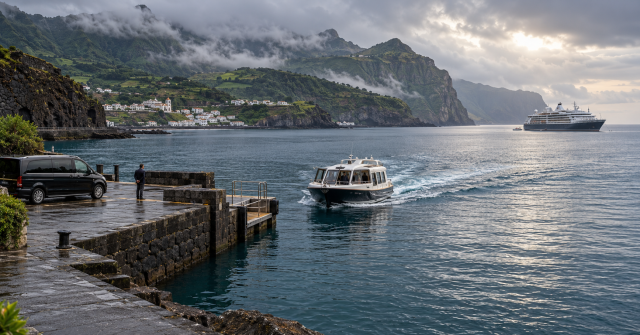
When a ship docks, guests walk through a gangway into the port. When it anchors offshore, tender boats carry them to land. The crossing may be short, but boarding and waiting can add substantially more.
Tender priority may go to ship-operated excursions, suite guests or loyalty members. Sea conditions can slow service or cancel the port entirely.
Travellers with limited mobility should confirm whether they can board the tender and whether mobility devices are accepted. “Wheelchair accessible ashore” does not mean the ship-to-shore route is accessible.
The Port Name May Be Geographic Shorthand
Cruise itineraries often use the destination guests want to visit, even when the ship berths in a distant gateway port. The transfer may involve a motorway, ferry or traffic that varies by time of day.
Ask for the expected driving time in each direction, not only the distance. A private vehicle can leave promptly and adapt its route, but it cannot remove a bottleneck shared by every coach and taxi leaving port.
The berth matters too. One terminal may be walkable while another requires a port shuttle before the vehicle can collect passengers. Confirm whether the guide meets at the gangway, terminal, security gate or shuttle drop-off.
Count Time at the Main Experience, Not Stops on the List
An eight-hour excursion may include two hours of driving, a panoramic stop, a break, lunch and shopping. The headline attraction could receive surprisingly little time.
Request a timed outline showing the principal site, lunch and optional stops. If the purpose is a museum, archaeological site or vineyard, protect that time first and let secondary stops flex.
A three-course lunch may be central to the experience, or consume the destination’s quietest hours. Decide whether a leisurely table matters more than additional time with the guide.
Private Does Not Automatically Mean Unrestricted
A private excursion controls pace and company, but local rules still apply. Historic centres may restrict cars, ports may require permits and some sites allow commentary only from licensed local guides.
Confirm whether the person meeting the ship is both driver and guide. A chauffeur may not guide inside a monument, while an expert guide may use a separate driver. Using both allows the vehicle to reposition while the guide stays with the guests.
Confirm ticket type and time. “Skip-the-line” usually bypasses the purchase queue, not security or every controlled entrance. Ask which queues remain and whether the guide enters with the guests.
Other Ships Can Change the Experience
A port that feels relaxed with one small ship changes when several large vessels arrive together. The effect reaches guides, vehicles, restaurants and popular sites.
Check how many ships are expected and when they arrive. A knowledgeable operator can reverse the usual sequence, arrange early entry or schedule lunch before the largest groups. Local expertise matters more here than a longer list of inclusions.
Understand What the Ship’s Protection Actually Covers
The strongest reason to choose a ship-operated excursion is operational protection. If its tour is delayed, the cruise line controls the response and will generally hold the ship or arrange for guests to rejoin it. Independent travellers remain responsible for returning on time.
That does not make every ship excursion better. A private day can offer more flexibility in straightforward ports. The calculation changes with ferries, mountain roads, borders, long distances or a tender return.
For an independent excursion, target a return at least 60 to 90 minutes before all aboard when the route is uncertain. Confirm the operator monitors schedule changes and has a backup vehicle and staffed emergency contact.
The best port days rarely feel rushed, even when they are carefully engineered. The guide is waiting in the right place, tickets match the arrival window and the route leaves room for an unplanned café, gallery or view. That sense of freedom comes from understanding the constraints first, then designing the day around what matters most.