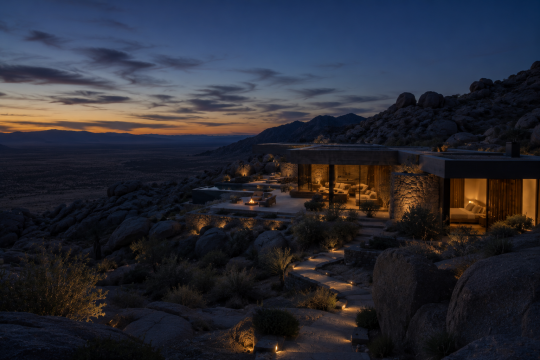
Private by Design: The Rise of Spaces Built for Seclusion
2026-05-26 Richard Shane
Founder and CEO
The World’s Greatest Vacations
Luxury travel has traditionally been associated with access, the best table, the most exclusive resort, the destination everyone else wanted to reach. Increasingly, however, the definition of luxury is shifting away from visibility and toward control.
Travelers are no longer simply looking for privacy. They are looking for environments designed around it from the beginning.
This has given rise to a new category of experience, spaces where seclusion is not an added feature, but the central philosophy behind the architecture, layout, and pacing of the stay itself.
The appeal goes beyond discretion. These environments fundamentally change how travel feels.
The Move Away From Shared Luxury
Many traditional luxury properties were built around social visibility. Large lobbies, active common spaces, crowded pools, and a constant sense of movement were once considered part of the atmosphere.
Now, many travelers are moving in the opposite direction.
The modern idea of exclusivity is becoming quieter and more spatial. Private villas, standalone pavilions, remote estates, and low-density properties are increasingly preferred over larger resort environments, even at the highest end of the market.
The difference is psychological as much as physical. The experience feels self-contained. Travelers settle more quickly because there is less ambient interruption competing for attention.
Space becomes calming instead of performative.
Architecture Designed Around Separation
The most compelling private retreats are intentional about how they create distance.
Arrival sequences are slower and more discreet. Pathways curve rather than expose. Buildings are positioned to preserve sightlines and silence. Outdoor areas feel protected without appearing enclosed.
In many of these properties, architecture works almost invisibly. The design guides movement naturally while preserving openness and connection to landscape.
Materials also tend to remain restrained and tactile, stone, limewash, raw wood, textured linen, muted tones shaped by surrounding light.
The result is not minimalism for its own sake. It is emotional clarity through reduction.
Why Seclusion Feels Different Now
Part of the growing appeal comes from contrast.
Daily life has become increasingly compressed by noise, notifications, density, and constant visibility. Truly quiet environments now feel rare in ways they did not a decade ago.
Travelers are responding accordingly.
What many people want from travel is no longer stimulation, but relief from it. A slower sensory environment. Fewer decisions. Less exposure to collective energy.
Private spaces support that shift naturally. They allow travelers to re-establish their own rhythm rather than adapting constantly to someone else’s.
Destinations Embracing Quiet Luxury
This movement is shaping luxury travel across very different geographies.
In the Cyclades, contemporary villas are being built directly into the terrain, prioritizing horizon lines, wind patterns, and visual stillness. In Costa Rica, rainforest properties increasingly blur the distinction between indoor and outdoor living while preserving complete seclusion.
Across the desert landscapes of Utah and New Mexico, architecture has become quieter and more elemental, designed around silence, scale, and changing light rather than decorative luxury.
Even traditional safari and island experiences are evolving toward lower-density models where privacy is integrated into the experience from the start.
Despite their differences, these destinations share the same core principle, luxury that withdraws rather than announces itself.
Time Changes Inside These Spaces
Private environments alter the perception of time almost immediately.
Without crowded common areas or externally imposed schedules, the pace becomes instinctive. Meals happen naturally. Mornings extend longer. Silence becomes part of the atmosphere rather than an absence to be filled.
This often leads to a deeper engagement with the surrounding landscape. Travelers notice weather shifts, sound, changing light, and spatial details more acutely because there are fewer competing distractions.
The experience becomes less transactional and more immersive.
The Future of High-End Travel
Quiet luxury has become an overused phrase in recent years, but its original appeal came from something very real, the desire for experiences that feel emotionally grounded rather than socially amplified.
Private-by-design travel reflects that shift perfectly.
These spaces are not trying to impress through scale or excess. They create value through atmosphere, calm, and the feeling of complete removal from unnecessary noise.
That may ultimately become the defining characteristic of modern luxury travel, not how much access a destination provides, but how fully it allows travelers to disconnect from everything beyond it.