The Luxury of Staying Longer
2026-07-13 Richard Shane
Founder and CEO
The World’s Greatest Vacations
For many years, the most ambitious travel itineraries were also the most crowded. A few nights in one city, a transfer to the coast, a short stay in the countryside, then another flight or train before the journey had time to settle. The appeal was understandable. More places meant more memories, more photographs, more proof that the trip had been fully used.
But luxury travel is beginning to move in another direction. The new privilege is not always seeing more. Increasingly, it is staying long enough for a place to become familiar.
This is a quieter kind of abundance. It is measured not in the number of stops, but in the depth of attention. The second visit to the same café. The walk taken without a map. The room that begins to feel less like accommodation and more like a temporary home. The pleasure of knowing how the light moves across a terrace at different hours of the day.
Fewer Places, Better Days
A longer stay changes the entire architecture of a journey. It removes the pressure to make every hour count. Mornings can begin slowly. Afternoons can be left open. A museum visit does not need to compete with a reservation, a transfer, and a checklist of things one feels obliged to see.
This does not make the experience less rich. Often, it makes it richer. When a traveler stops moving constantly, the destination has more room to reveal itself. The rhythm of a neighborhood becomes visible. The difference between a weekday market and a weekend one starts to matter. Restaurants are chosen with curiosity rather than urgency. A local guide can become more than a source of information, offering context that deepens over several days instead of being compressed into a single morning.
There is also a physical luxury in unpacking properly. Clothes hang in a wardrobe. Books rest on a bedside table. A favorite chair becomes part of the day. These small domestic details are not incidental. They are part of what allows the traveler to relax fully into the experience.
The Rise of the Temporary Home
The longer-stay mindset has changed what sophisticated travelers look for in a property. The grand hotel still has its place, especially when the service is exceptional and the setting is culturally significant. But there is growing appeal in residences, villas, private estates, serviced apartments, and small hotels that offer the emotional quality of a home without sacrificing refinement.
Space matters, but not only in square footage. The best longer-stay properties create a sense of ease. A kitchen that invites breakfast at a natural pace. A garden that becomes part of the morning routine. A library, studio, courtyard, pool house, or shaded veranda that gives the day multiple places to unfold.
Design plays an important role here. A property suited to a longer stay cannot rely on immediate drama alone. It has to age well over the course of the visit. The materials, proportions, views, lighting, and textures must remain pleasing after the first impression fades. True luxury in this context is not spectacle. It is livability elevated by taste.
Travel That Leaves Room for Place
Longer stays also allow travelers to engage with culture in a less performative way. A brief visit often reduces a city or region to its most famous symbols. A longer one makes room for smaller encounters, which can be more memorable.
A ceramics studio outside the center. A family-run restaurant recommended after several conversations. A quiet church or garden that is not widely photographed. A walk through a residential street at dusk. The ability to return to a gallery because the first visit felt too brief. These experiences rarely announce themselves as important, but they often become the moments that remain.
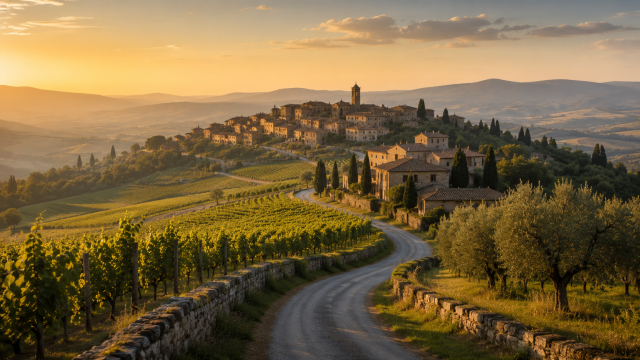
This is especially true in places with layered cultural identities. Cities such as Kyoto, Lisbon, Edinburgh, Mexico City, Florence, Istanbul, and Buenos Aires reward patience. So do rural regions, wine countries, islands, and mountain villages where the character of daily life cannot be understood in a single day. To stay longer is to let a place be more than scenery.
The Emotional Value of Slowness
There is a reason this mode of travel feels increasingly appealing now. Many people live in a state of constant acceleration. Their days are scheduled, interrupted, measured, and optimized. Travel that repeats the same pace in a more beautiful location can feel impressive, but not necessarily restorative.
A longer stay offers a different promise. It gives the nervous system time to adjust. It allows sleep to deepen, appetite to reset, and conversation to lengthen. It creates the possibility of unplanned hours, which are often the first thing lost in daily life and the last thing restored by conventional vacations.
The best luxury journeys have always offered some form of transformation. Today, that transformation may be less about dramatic adventure and more about recovering a sense of spaciousness. Not emptiness, but room. Room to think, taste, notice, walk, read, and decide slowly.
A More Mature Way to Travel
Staying longer requires a certain confidence. It asks the traveler to resist the instinct to prove the trip through variety. It replaces breadth with intimacy and movement with presence. The reward is a journey that feels less consumed and more lived.
This does not mean staying in one place for an entire season, although some travelers may choose exactly that. It can mean a week instead of three nights, one region instead of four, or an itinerary built around two meaningful bases rather than constant relocation. The principle is simple: give each place enough time to become specific.
In the end, the luxury of staying longer is not only about comfort. It is about access to a deeper kind of travel experience. The traveler begins to see past the prepared face of a destination and into its rhythm. The days become less performative. The memories become less interchangeable.
There are still journeys that call for movement, discovery, and grand variety. But there is a growing elegance in the opposite choice: to arrive, settle in, and let the world come into focus slowly.