The Rise of the Cool Summer Journey
2026-07-06 Richard Shane
Founder and CEO
The World’s Greatest Vacations
Summer luxury used to be easy to recognize. It was sun-drenched, coastal, and often arranged around the reliable pleasures of sea air, long lunches, and terraces facing the water. Those pleasures have not disappeared, but they no longer define the season as completely as they once did.
A quieter shift is taking place among discerning travelers. Increasingly, the most appealing summer journeys are not the hottest, busiest, or most obvious ones. They are cooler, slower, and more spacious. They unfold in places where the air is clean, the light lingers, and the day does not have to be organized around escaping the midday heat.
This is not a rejection of summer. It is a refinement of it.
Beyond the Traditional Summer Map
For decades, the classic summer itinerary leaned south. The Mediterranean, the Caribbean, and sun-soaked resort destinations became shorthand for seasonal escape. For many travelers, they still hold enormous appeal. But the emotional center of luxury travel is changing. Space, comfort, climate, and atmosphere now matter as much as the postcard view.
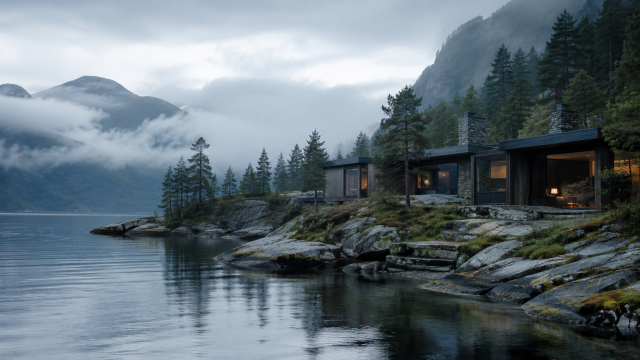
That is why cooler destinations are becoming more compelling. The draw might be a misty Nordic coastline, a Scottish estate wrapped in green hills, a quiet alpine village, the wide-open drama of Alaska, or the summer clarity of Atlantic Canada. These places offer a different kind of indulgence. They do not overwhelm the senses. They restore them.
The appeal is partly practical. Warmer summers and heavier crowds have made some familiar destinations feel less effortless than they once did. But the deeper reason is aesthetic. Cooler places invite a more measured way of traveling. They encourage walking instead of waiting, lingering instead of rushing, and observation rather than spectacle.
The New Summer Mood
The cool summer journey has its own visual language. It is less about brightness and more about texture. Stone, linen, timber, glass, moss, wool, water, fog, and long evening light become part of the experience. The palette shifts from sunlit golds and blues to greens, greys, soft whites, and the silvery tones of northern air.
Hotels and retreats in these settings often feel more integrated into the landscape. A lodge may sit low against the shoreline. A mountain property may appear carved into the slope rather than placed on top of it. A historic inn may offer its luxury through restraint, proportion, and quiet service rather than visible excess.
This is where design becomes central. In cooler climates, interiors matter differently. A fire, a library, a window seat, a warm bath, a sauna, or a candlelit dining room can become as memorable as a beach club. The pleasure is not only in where one goes, but in how the setting changes the rhythm of the day.
Travel That Feels Less Crowded
Affluent travelers are also becoming more sensitive to density. The most desirable places are not always the most famous ones, especially in peak season. A destination can be beautiful and still feel depleted by too many people moving through it at once.
The cool summer journey offers a different promise. It opens space. It replaces queues with quiet roads, packed squares with early morning streets, and crowded waterfronts with landscapes that still feel large enough for solitude.
That does not mean isolation. Many of the most rewarding cool-climate journeys are deeply social and cultural. They include small restaurants, local guides, working harbors, farmers’ markets, artists’ studios, historic towns, and hotels where the staff understand the surrounding region with real intimacy. The difference is scale. The encounters feel human rather than staged.
Movement as Part of the Pleasure
These journeys also bring back the beauty of arrival. In warmer resort travel, transportation is often something to minimize. In cooler, more expansive destinations, movement can become part of the experience.
A train crossing a mountain pass. A ferry moving through still water. A private car following a coastal road beneath shifting skies. A small expedition vessel approaching a remote harbor. These forms of travel allow the landscape to reveal itself gradually. They create anticipation, which is one of travel’s most underrated luxuries.
There is a certain elegance in not arriving too quickly. The slower approach makes the destination feel earned. It gives the traveler time to adjust, to notice the change in light, architecture, language, vegetation, and air. By the time one arrives, the journey has already begun to work.
A More Intelligent Summer Luxury
What makes the cool summer journey feel especially current is that it answers several desires at once. It offers comfort without excess, beauty without spectacle, and discovery without the pressure to keep moving. It is seasonal, but not obvious. Aspirational, but not loud.
It also reflects a more mature understanding of luxury. The best summer trip is not necessarily the one with the most dramatic view or the most famous address. It may be the one where the temperature is right for a long walk after dinner, where the hotel feels connected to the land around it, where mornings begin quietly, and where the day can unfold without negotiation.
In this sense, cooler summer travel is less a trend than a correction. It brings the season back to something more elemental: fresh air, open space, good design, thoughtful hospitality, and the rare pleasure of feeling unhurried.
For travelers who have already seen the obvious places, that may be the real invitation. Not to escape summer, but to experience it with more room to breathe.