Wellness Without the White Robe
2026-07-20 Richard Shane
Founder and CEO
The World’s Greatest Vacations
For a long time, wellness travel was easy to picture. A spa corridor. A treatment menu. A white robe. A dimly lit room scented with eucalyptus. The experience could be pleasant, even restorative, but it often felt separate from the journey itself, as if wellbeing were something scheduled between breakfast and dinner.
That idea is changing. The most interesting wellness travel today is less about retreating from a destination and more about entering it differently. It is found in the rhythm of a place, in the quality of sleep, in a long walk before breakfast, in cold air after a sauna, in food that feels connected to the landscape, and in hotels designed to quiet the nervous system before a treatment has even been booked.
This is wellness without the white robe. It is less performative, less clinical, and often more luxurious.
From Treatment to Rhythm
The traditional spa remains part of luxury hospitality, but it is no longer the whole story. Increasingly, travelers are looking for wellbeing that extends through the entire day. The question is not only what treatment is available, but how the property makes a guest feel from morning to night.
Light matters. So does sound. A room that is truly quiet, a bed designed for deep sleep, a breakfast that feels nourishing rather than excessive, and a setting that encourages natural movement can shape a trip more profoundly than a single appointment. The most thoughtful hotels understand this. They treat wellness not as an amenity, but as an atmosphere.
In this new model, the best moments are often simple. Walking through a pine forest before the heat of the day. Sitting by a lake after a swim. Reading in a shaded courtyard. Taking dinner earlier and sleeping better because the day was not overfilled. These are not dramatic experiences, but they are increasingly rare in ordinary life. That rarity gives them value.
Nature as the New Treatment Room
Many of the most compelling wellness destinations are built around access to nature rather than elaborate programming. Mountains, forests, deserts, lakes, coastlines, vineyards, and thermal landscapes all offer their own forms of restoration.
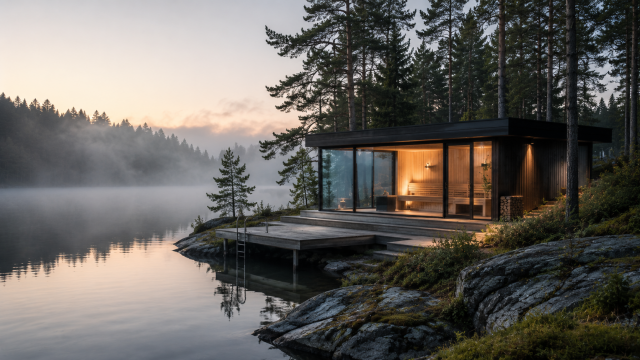
A Nordic sauna beside cold water creates a rhythm of heat, air, and immersion. A desert retreat offers silence, mineral tones, wide skies, and a powerful sense of scale. A mountain lodge encourages movement through hiking, climbing, skiing, or simply breathing cleaner air. A coastal property may use tides, salt, wind, and long horizon lines to shift the body into a slower state.
The luxury here is not decoration. It is proximity. To wake up close to a landscape that changes the way one moves, eats, sleeps, and thinks is a form of wellbeing that cannot be replicated indoors. The setting does part of the work.
The Design of Calm
Wellness travel has also become more architectural. The best properties are not only offering spa programs. They are designing for calm from the beginning.
This can be seen in the way a building sits in the landscape, the restraint of the interiors, the use of natural materials, and the relationship between private and communal spaces. Timber, stone, plaster, linen, clay, and glass are often used not as style signals, but as part of a quieter sensory experience. A well-placed window can be as meaningful as a treatment room. A bathing space that opens toward trees can do more for the mood of a guest than an elaborate wellness menu.
There is also an important difference between minimalism and emptiness. The strongest wellness design does not feel cold or severe. It feels considered. A bench in the right place, a view held at the right angle, warm lighting at dinner, and enough space to move without friction all contribute to the feeling that the day has been softened.
Food, Sleep, and the Return of the Ordinary
One of the more interesting changes in wellness travel is the renewed importance of ordinary daily rituals. For years, luxury wellness leaned toward novelty, rare ingredients, advanced treatments, and specialized protocols. Those things still exist, but many travelers are also rediscovering the value of basics done exceptionally well.
Good sleep. Fresh food. Time outdoors. Movement that feels natural. Conversation. Quiet. A sense of place. These may seem simple, but they are often the very things modern life disrupts most consistently.
Food is especially important. The most memorable wellness meals are not always the most restrictive. They are seasonal, precise, generous, and rooted in the region. A breakfast of local fruit, eggs, bread, honey, and coffee on a terrace can feel more restorative than a heavily explained menu. A dinner built around vegetables from nearby farms, fish from cold waters, or herbs from the property’s garden can create a stronger connection between wellbeing and place.
This kind of wellness does not ask the traveler to become someone else for a week. It helps them return to a better version of themselves.
A Less Anxious Kind of Luxury
Luxury has often been associated with access, exclusivity, and abundance. Wellness adds a different measure. It asks whether a journey leaves the traveler feeling better than when they arrived.
The answer does not depend on intensity. A trip does not need to be filled with appointments, assessments, or optimization to be restorative. In fact, the most valuable wellness journeys may be the ones that reduce the need for decisions. The hotel is quiet. The air is clean. The food is good. The room is comfortable. The landscape invites movement. The day has enough structure to feel cared for and enough openness to feel free.
That balance is difficult to create, which is why it feels so luxurious when it appears effortless.
Wellbeing as a Way of Traveling
The future of wellness travel may not look like a retreat at all. It may look like a beautifully designed hotel in the mountains, a small coastal inn with exceptional food, a forest lodge with a sauna and walking trails, or a city hotel that understands silence, sleep, and light.
What connects these experiences is not a uniform aesthetic, but a shared intention. They allow travelers to slow down without feeling removed from the world. They make wellbeing part of the journey rather than a scheduled escape from it.
There will always be a place for the spa robe, the massage table, and the ritual of stepping away. But the more sophisticated version of wellness is becoming less visible and more deeply felt. It is in the air, the architecture, the food, the pace, and the rare pleasure of a day that does not need to be defended from noise.
For today’s traveler, that may be the most meaningful luxury of all: not simply to be pampered, but to feel restored by the way a place allows life to unfold.