When Summer Moves North
2026-08-01 Richard Shane
Founder and CEO
The World’s Greatest Vacations
Summer once came with a compass setting. Travellers followed the sun south, toward whitewashed islands, crowded marinas and the familiar heat of the Mediterranean. Warmth was part of the promise. The hotter the afternoon and the brighter the water, the more completely summer seemed to have arrived.
That instinct is beginning to change. As southern summers become hotter and busier, a different geography is drawing attention. Nordic coastlines, Scottish islands, alpine valleys, Canadian wilderness and the cool edges of the North Atlantic offer an alternative built around space, light and the pleasure of being outdoors without retreating from the afternoon.
The shift is sometimes described as the rise of the “coolcation.” The word captures the temperature, but very little of the experience. Travelling north is not simply an escape from heat. It introduces an entirely different interpretation of summer.
A Season Defined by Light
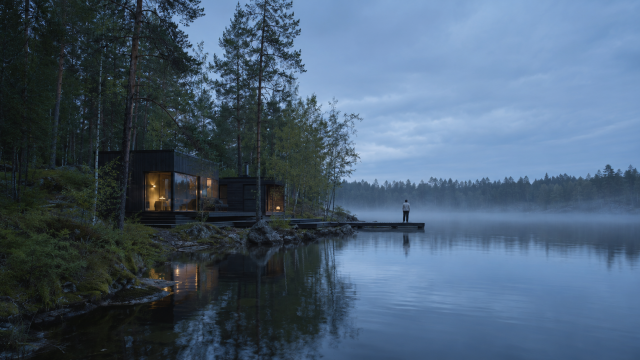
In the north, summer is measured less by temperature than by light. Days stretch into evenings that seem reluctant to end. Above the Arctic Circle, the sun remains visible around the clock for part of the season. Farther south, darkness arrives only briefly, leaving lakes, forests and coastal villages suspended in a soft, luminous dusk.
This abundance of daylight changes the rhythm of a journey. Dinner can be followed by a walk along the water at ten. A boat can leave the harbour when the rest of the world would be preparing for bed. A sauna session ends with a swim beneath a sky that still holds the colour of late afternoon.
There is no urgency to fit everything between breakfast and sunset. The day feels generous, allowing experiences to unfold without being hurried into a conventional itinerary. It is one reason northern summers can feel restorative even when they are active.
The Luxury of Comfortable Movement
Heat has always shaped how people travel, but increasingly it determines what can comfortably be done. In the hottest destinations, summer afternoons may be spent moving between air-conditioned interiors. Historic streets empty, terraces become uncomfortable and planned excursions are shifted toward early morning or evening.
Cooler landscapes offer something deceptively valuable: the ability to remain outside. Travellers can hike through birch forests, cycle between villages, kayak along a sheltered coastline or linger over lunch without treating the midday sun as an obstacle.
This freedom is changing the meaning of seasonal luxury. The greatest indulgence may not be a private pool or shaded cabana, but an entire day that remains open to possibility. Fresh air, swimmable lakes, quiet trails and evenings cool enough for a fire create a kind of comfort that cannot be manufactured indoors.
Design That Belongs to the Landscape
The architecture of northern hospitality reinforces this quieter sensibility. Rather than separating guests from the environment, many of its most compelling retreats frame the landscape with restraint. Timber, stone, wool and glass replace decorative excess. Windows are positioned toward forests, fjords or changing skies. Rooms are designed around warmth, texture and the view.
Even highly sophisticated properties often retain the atmosphere of a private house. A lakeside cabin may pair a wood-burning sauna with considered contemporary furniture. A converted lighthouse can offer little beyond excellent food, beautiful bedding and an uninterrupted horizon. On a remote island, the absence of a formal schedule becomes part of the experience.
This is luxury expressed through editing. There may be fewer objects, fewer people and fewer demands on one’s attention. What remains feels deliberate.
A Different Relationship with Water
Northern summer is still deeply connected to water, although not in the familiar language of beach clubs and resort pools. Its defining landscapes are archipelagos, mountain lakes, narrow sea lochs and rivers running clear through forests.
The experience is often more intimate. A morning begins with coffee on a weathered dock. A small boat carries guests between islands where there is little more than a fishing village and a restaurant serving what arrived that day. Swimming is brisk rather than languid, followed by towels, warm robes and the particular satisfaction of returning to a heated room.
Along the Norwegian coast, in Finland’s lake country or among the islands of Sweden, water is not merely a backdrop. It determines how people move, eat and spend the day. It creates natural pauses, encouraging a slower form of travel without requiring a formal wellness program to achieve it.
Summer Without the Performance
There is also a social difference to travelling north. Many of these places are not built around the performance of summer. Clothing is practical, restaurants are relaxed and experiences rarely depend on gaining access to the right table or stretch of sand.
The most memorable moments may be modest: cloudberries gathered beside a trail, bread served warm in a small coastal inn, the scent of wet pine after rain or a silent crossing between islands. Such experiences resist spectacle, but remain vivid because they are closely tied to place.
This does not mean northern destinations are undiscovered or immune to seasonal crowds. Nor are they uniformly cool. Climate volatility reaches these regions too, and increasingly warm summers can occur far above their historic range. Thoughtful planning remains essential.
What has changed is the assumption that travelling north represents a compromise. For a growing number of travellers, it is becoming the first choice.
A Broader Map of Summer
The Mediterranean will not lose its allure. Its food, history, architecture and coastal life remain inseparable from the idea of European summer. But it no longer has to carry the entire season.
Looking north expands the possibilities. Summer can be a cabin beside a Finnish lake, a path through the Scottish Highlands or a modern lodge facing a Norwegian fjord. It can arrive with a linen shirt and sandals, or a light sweater and the sound of rain on a timber roof.
The appeal is not coldness for its own sake. It is the discovery that summer can feel spacious again: long days, open windows, uncrowded water and enough light to stop watching the clock.