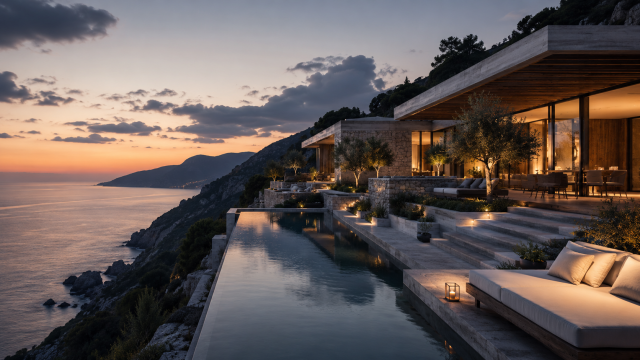
Why Design-Led Hotels Are Becoming Destinations in Their Own Right
2026-06-09 Richard Shane
Founder and CEO
The World’s Greatest Vacations
The best hotels have always offered more than a place to sleep. They have offered a way of entering a destination before stepping outside the door.
That idea is becoming more important in luxury travel. Increasingly, travelers are choosing hotels not simply for their location, service, or amenities, but for the world they create. Architecture, interiors, materials, landscape, lighting, scent, sound, and the rhythm of daily life are shaping how a destination is experienced.
A design-led hotel does not feel separate from the place around it. It interprets it. Sometimes quietly, through stone, wood, linen, shadow, and proportion. Sometimes more boldly, through sculptural architecture, contemporary art, or a dramatic relationship with the landscape. At its best, the hotel becomes a lens through which the traveler understands where they are.
This is why design-led hotels are increasingly becoming destinations in their own right.
A More Considered Kind of Arrival
There is a difference between checking into a hotel and arriving somewhere.
The most memorable hotels understand this distinction. They do not begin the experience at the reception desk. They begin it on the approach. A long road through olive trees. A discreet doorway on a quiet city street. A bridge over water. A desert path leading toward low architecture almost hidden in the landscape.
Design-led hotels often build anticipation slowly. They understand that arrival is emotional. The first view, the transition from public space to private retreat, the change in light, the sound underfoot, the way a lobby opens or narrows, all of it contributes to the first impression.
This matters because luxury travelers are looking for experiences that feel intentional. Not theatrical, not overly styled, but composed. A hotel that has been carefully designed can create a sense of calm before a single activity begins.
The destination starts to reveal itself through atmosphere.
Architecture That Belongs to Its Setting
The strongest hotel design rarely feels imported. It belongs to the landscape, the city, or the culture around it.
In mountain regions, this may mean architecture that follows the slope rather than dominates it. In desert settings, it may mean low, quiet forms that respond to heat, distance, and shadow. Along coastlines, it may mean buildings shaped around wind, salt, and horizon. In historic cities, it may mean preserving old structures while introducing contemporary restraint.
This relationship between architecture and place is what separates thoughtful design from decoration.
A hotel can be beautiful without being meaningful. A design-led hotel aims for something deeper. It asks why a building should look and feel the way it does in that exact location. What materials belong there. How rooms should frame the view. How outdoor and indoor spaces should connect. How privacy can be created without cutting the traveler off from the landscape.
When this is done well, guests are not simply staying near a destination. They are staying within its character.